
How One Chess Supporter Is Backing Young Prodigies, and What Parents Can Learn
When people think of chess sponsorship, they usually picture a company logo on a tournament banner. Turkish entrepreneur Evren Ucok has taken a very different path. In about three years, he has put more than US$5 million into chess, and much of it goes toward the young people who play the game.
His story, first reported by ChessBase India, is about prodigies and rating records. It is also about a worry that many Singapore parents share: can children still focus in a world of short videos and instant answers?
The Worry Behind the Investment
Ucok's motivation is not only about producing champions. He is concerned about what constant digital entertainment is doing to young minds. Fast videos and algorithm-driven feeds, he argues, train children to expect quick rewards and to think less. He points to falling reasoning scores in recent international education results across the Western world as a sign that something is going wrong.
His answer is chess. A game of chess asks the opposite of a short video: look carefully, work out what could happen, compare choices and only then act. In his view, it replaces passive scrolling with active, focused thinking.
He even puts a number on it. By his own estimate, roughly 50 to 100 hours of real competitive chess, even among classmates, can lift concentration, humility and logical reasoning in children and pre-teens, and he believes the benefit lasts. This is a personal estimate and not a proven scientific result, but it is a useful rule of thumb for how long habits take to form.
What the Support Actually Covers
The programme goes well beyond paying tournament fees. According to the article, it includes:
- Regular coaching from grandmasters and super-grandmasters
- Advice on career planning and choosing tournaments
- Training camps
- Sports psychology
- Personalised nutrition and physical fitness
- Financial help for families when needed
Beyond individual players, Ucok also backs several clubs and organisations. These include the Marseille Chess Club, which supports top young talents and underprivileged children in the city, the European Chess Union, with a focus on women's and senior chess, the Monte Carlo Chess Club, and the Istanbul Chess Club, where he first played as a teenager.
He is also funding technology. This includes very powerful chess engines, a professional online platform designed to encourage fair and friendly play, and research into the small hidden devices used for cheating in over-the-board games. His team shared its findings with chess authorities and tournament organisers.
Where It All Began: One Teenager Close to Quitting
The whole programme grew from a single player. In August 2023, Turkish prodigy Yagiz Kaan Erdogmus was close to giving up chess because he lacked financial support. Through a mutual friend, chess author Selim Gurcan, Yagiz and his family met Ucok, who promised to back him for at least five years.
The results came quickly. With intensive coaching from Grandmaster Mert Erdogdu, Yagiz went from no grandmaster norms to three in three consecutive tournaments, and he earned the grandmaster title in April 2024. Former world number two Shakhriyar Mamedyarov later joined as coach, and the team organised training camps and three "Clash of Generations" matches against elite opponents. Yagiz scored 12.5 points from 18 games in those matches.
By the age of 14, he had passed a rating of 2700, the youngest player in history to do so. At 15, he is the world's top-rated junior. At the 2026 Chess Olympiad, he played first board for Turkey and won the individual silver medal on that board with a score of 8 out of 10.
The Wider Group of Young Talents
Yagiz's success led Ucok and Selim Gurcan to support more players. Here are the ones highlighted in the article.
The Youngest Record-Breakers
- Luca Protopopescu (age 10): A young talent from Marseille, he became the youngest person ever to reach a rating of 2200, at just 9 years old. That rating is often seen as the line between strong amateurs and professionals.
- Bodhana Sivanandan (age 11): She became the youngest girl in history to beat a grandmaster rated above 2600, breaking a record set by the legendary Judit Polgar in 1988. Shortly afterwards, she became the youngest British Women's Champion ever.
The Rising Teenagers
- Marc Llari (age 13): He won the Under-12 World Cup in June 2026, scoring 9 out of 11 without losing a game. In August, he earned his first international master norm in Italy.
- Christian Glöckler (age 14): The German player won the Masters Open at the Biel Chess Festival in July 2026 and earned his first grandmaster norm. He is already rated above 2500.
- Atilla Kuru (age 15): He completed his three grandmaster norms in 2026 and became Turkey's newest grandmaster at 15, finishing his final tournament in Barcelona unbeaten.
The Older Prodigies
- Aydin Suleymanli (age 21): The Azerbaijani player climbed into the world's top 50 and was reported to have beaten world number one Magnus Carlsen at a rapid and blitz team event in June 2026.
- Isik Can (age 21): He won a major tournament in China without losing a game and helped the University of Missouri win the US national collegiate title. He earned his grandmaster title while studying business, which shows that chess and academics can go together.
Beyond Results: Chess Brings People Together
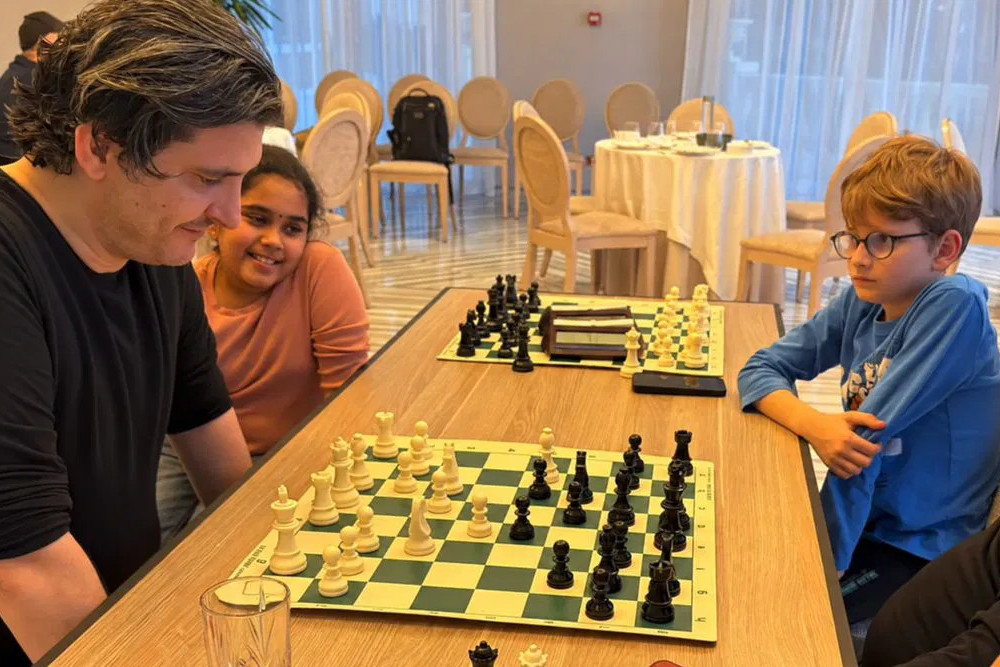
One of the nicest parts of the article has nothing to do with ratings. It describes a training camp in Marseille in July 2026, where several young players trained together with grandmasters, and a family gathering in Cannes in February 2026.
At the Cannes gathering, players and their families relaxed with a game called "Hand and Brain", where one partner names the piece to move and the other chooses the move. It depends entirely on teamwork and understanding. They also played bughouse, a fast four-player version of chess. The winning pair put their victory down to two years of working together and sharing a language, though the losing pair offered their own excuses.
The article's final message is that chess may sharpen minds for an AI-driven world, but its greatest strength is bringing people together in a very human way.
What This Means for Singapore Parents
Few children will break rating records, and that is not the point. A few useful ideas come out of this story:
- **Good support matters.** Every young player in the story had coaches, mentors and a strong family behind them.
- **Practice takes time.** Habits like focus and patience build gradually, over many hours of play.
- **Chess and school can coexist.** Isik Can's studies show that serious chess does not need to replace education.
- **The social side is real.** Friendships, teamwork and good sportsmanship are part of the benefit.
- **Start with enjoyment.** Children who love the game keep playing, and that is where improvement comes from.
Final Thoughts
Evren Ucok's story shows what can happen when one person decides to back young talent over the long term. It also reminds us of a simpler idea that any family can try at home: put the screen down, set up a board and think carefully about the next move.
*This article is an original summary inspired by "Evren Ucok and the case for chess in developing young minds" by Selim Gurcan, published by ChessBase India on 4 October 2026. For the full story, photos and more detail, read the original: https://en.chessbase.com/post/evren-ucok-syoung-minds*