Blog Insights

Latest articles on Physics, Chess, and Academic Excellence.

Featured Article: Scientific Theory vs Scientific Law
Featured
10 Min Read read

Scientific Theory vs Scientific Law

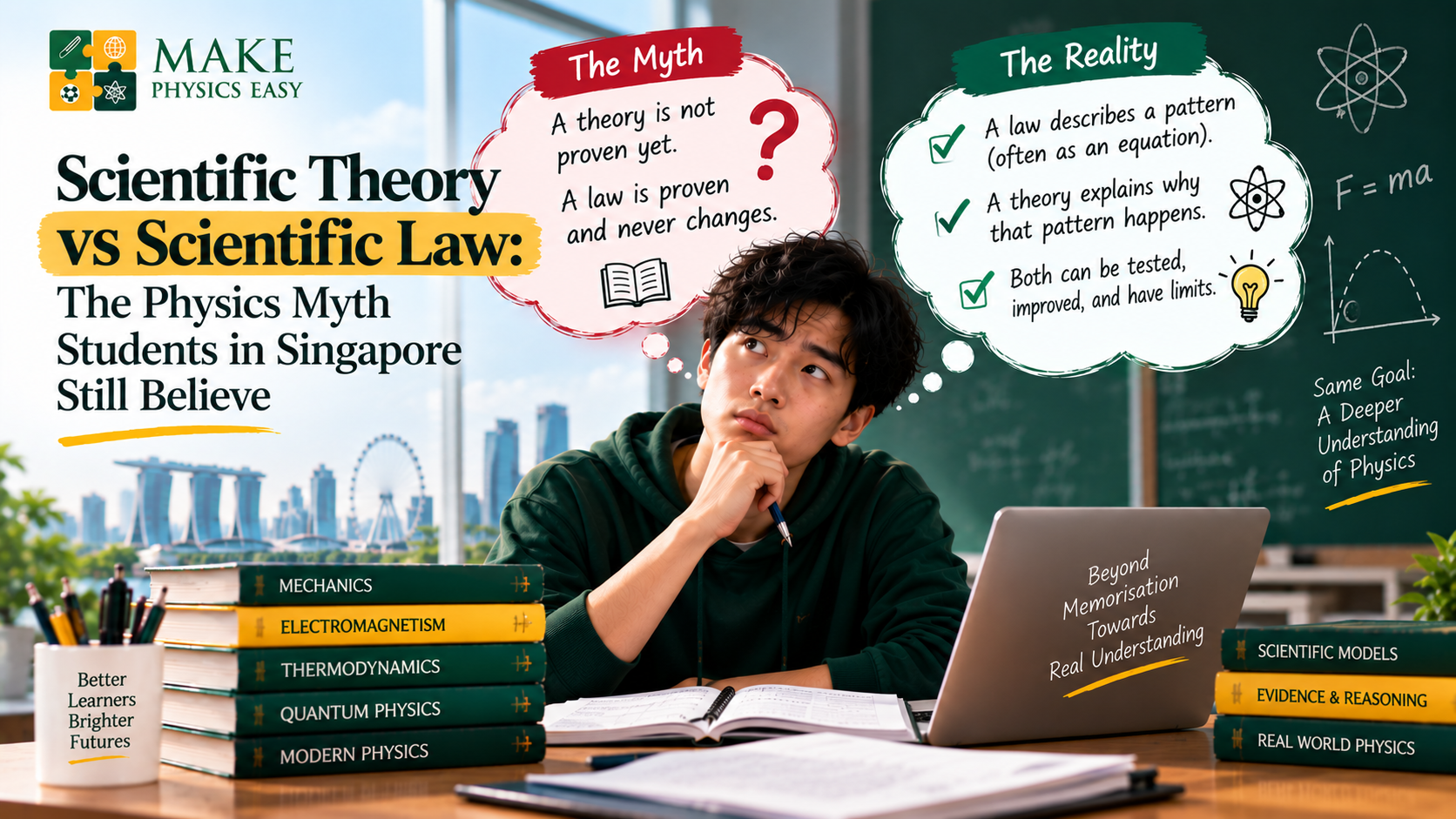
Ask a Sec 4 student, "What is the difference between a scientific theory and a scientific law?" and you will hear a very familiar answer: "A theory is not proven yet. A law is proven and never changes." It sounds sensible, and it is repeated in many notes and textbooks. But it is a common physics misconception, and it quietly hurts marks in O-Level Physics, H2 Physics, and IB Physics every year.

Read Article
High School Physics Students' Personal Epistemology
Physics
10 Min Read read

High School Physics Students' Personal Epistemology

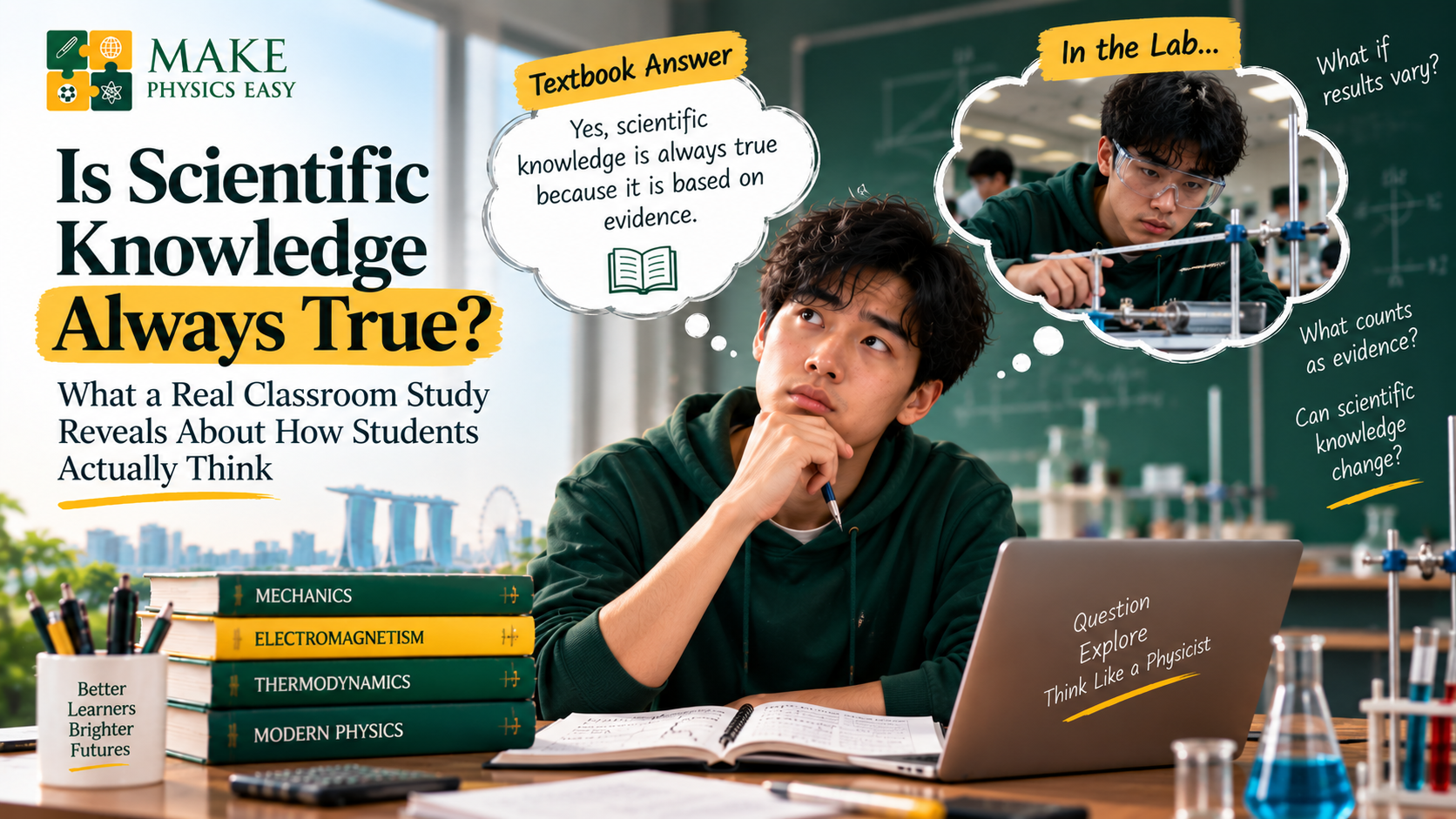
If you have ever asked a physics student "is scientific knowledge always true?" you probably got a confident, textbook-sounding answer. But here is the catch: high school physics students' personal epistemology often looks completely different once you watch what they actually do in the lab. A recent classroom-based case study followed nine eleventh-grade physics students for six weeks, and the findings say a lot about how science education practices shape the way young learners think about knowledge itself.

Read More
Why Student Teachers Struggle to Explain Everyday Physics
Physics
10 Min Read read

Why Student Teachers Struggle to Explain Everyday Physics

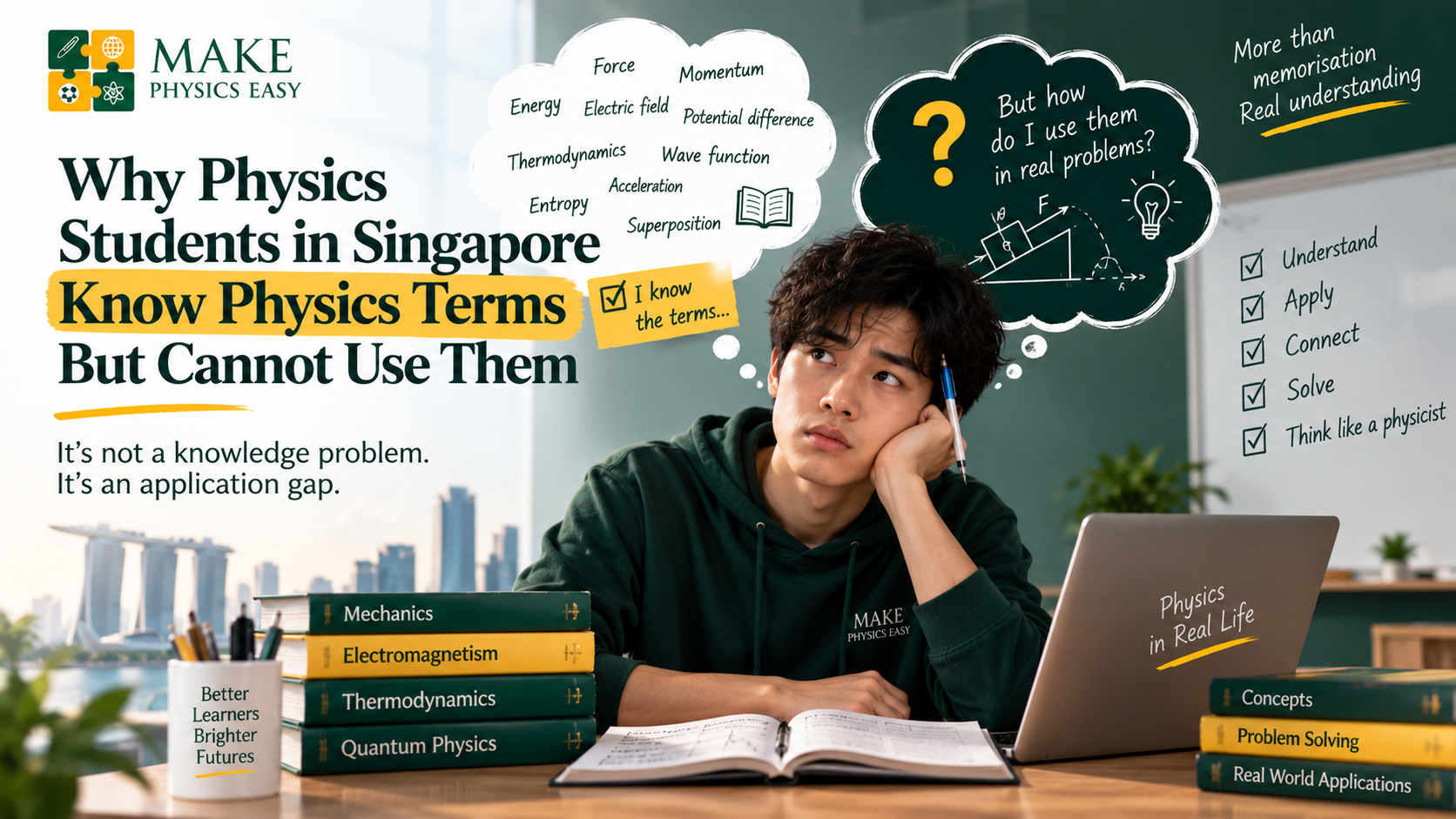
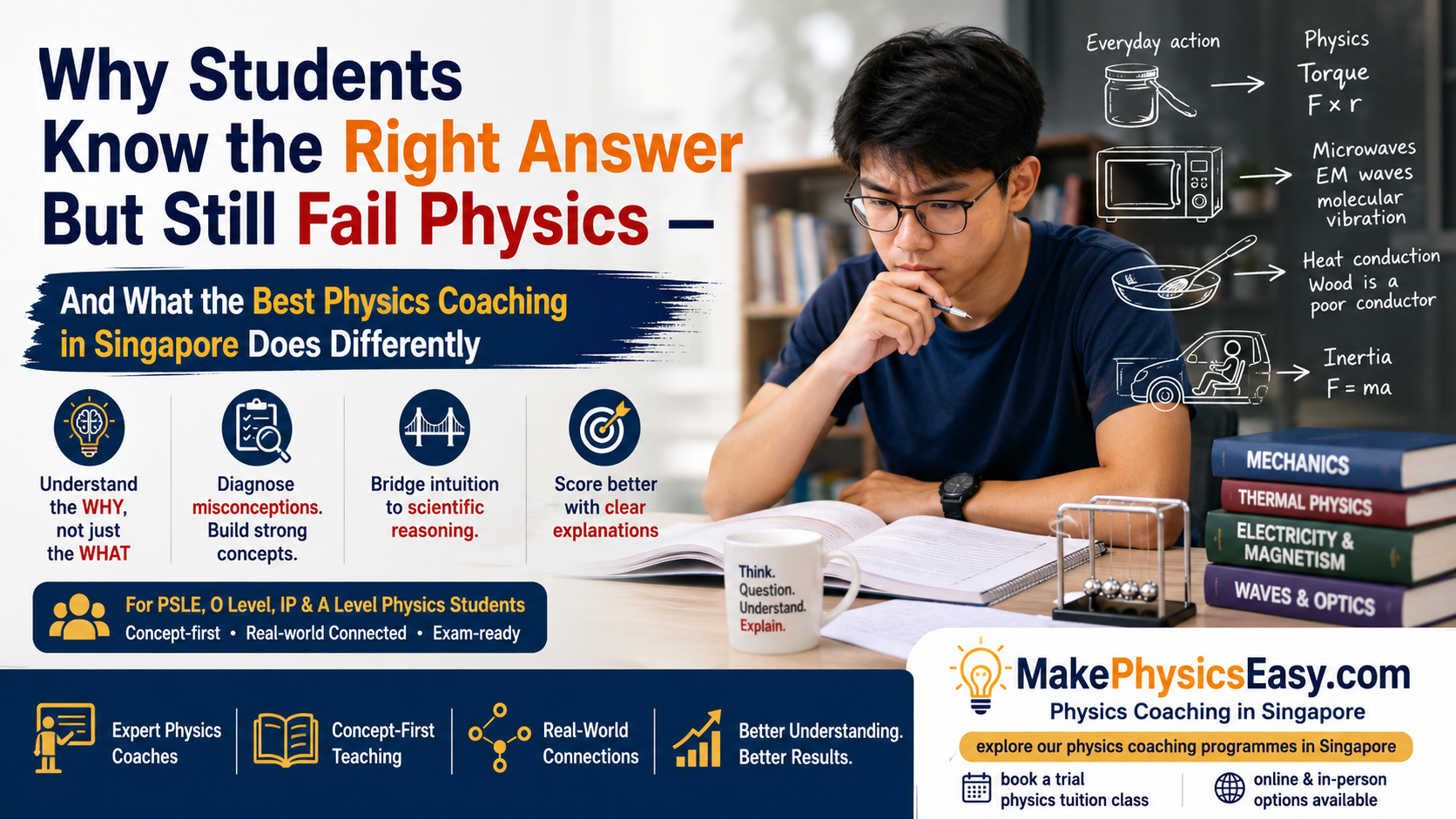
A student teacher — someone who will one day stand in front of a classroom of 30 kids — can recite Newton's Laws from memory. They can write out the formula for pressure. They can tell you that heat conduction is responsible for why a metal spoon gets hot when you stir soup. But ask them why they chose a wooden spoon this morning, and the explanation suddenly falls apart.

Read More
Why University Physics Students Struggle to See the Big Picture
Physics
10 Min Read read

Why University Physics Students Struggle to See the Big Picture

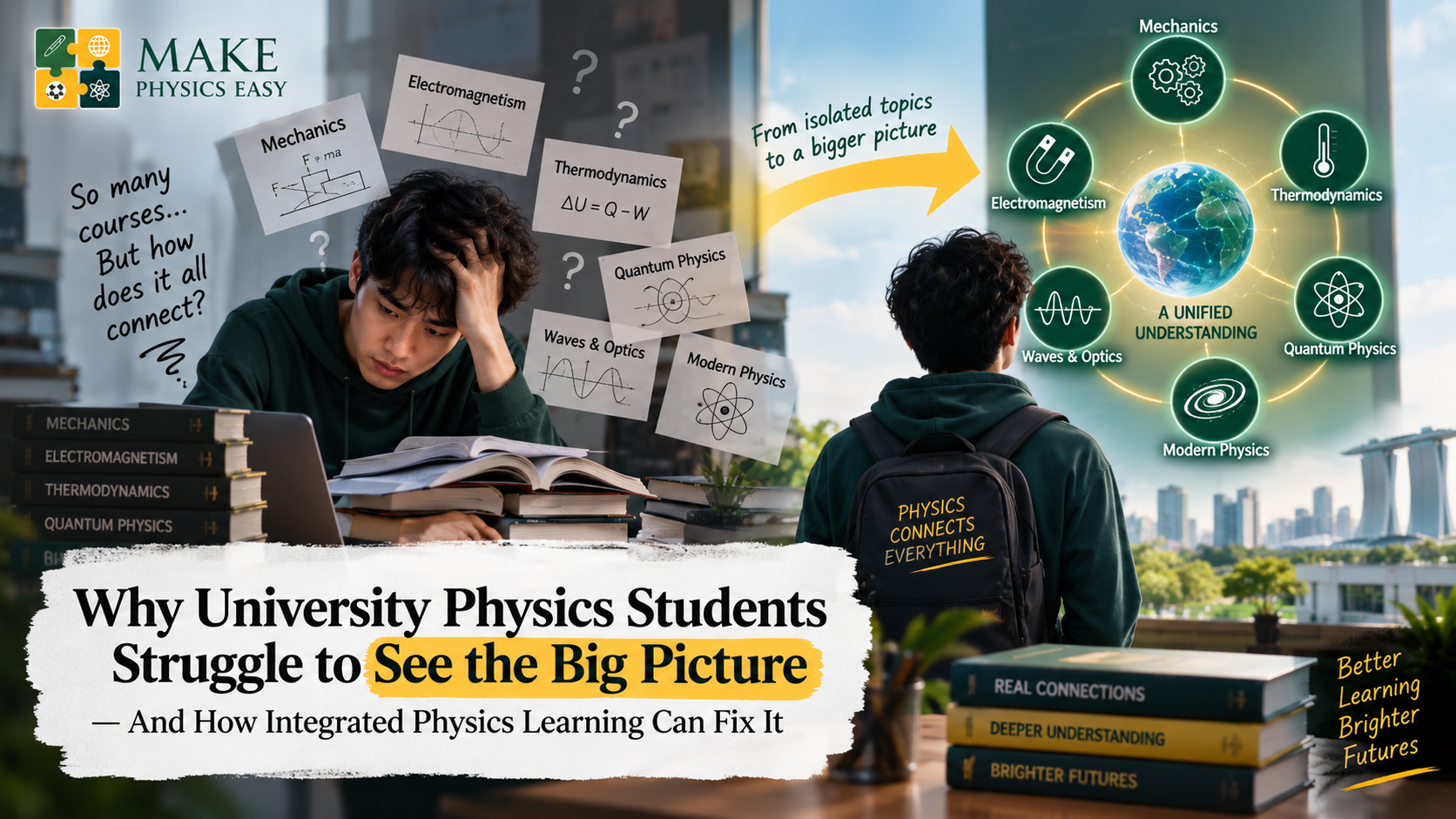
Have you ever finished a university physics course, passed the exam, and still felt like you had no idea how any of it connected to the course you took last semester? You are not alone. Millions of physics and engineering students around the world experience the same thing — and new research shows it is not their fault.

Read More
Why Future Science Teachers Struggle With Everyday Physics Reasoning
Physics
10 Min Read read

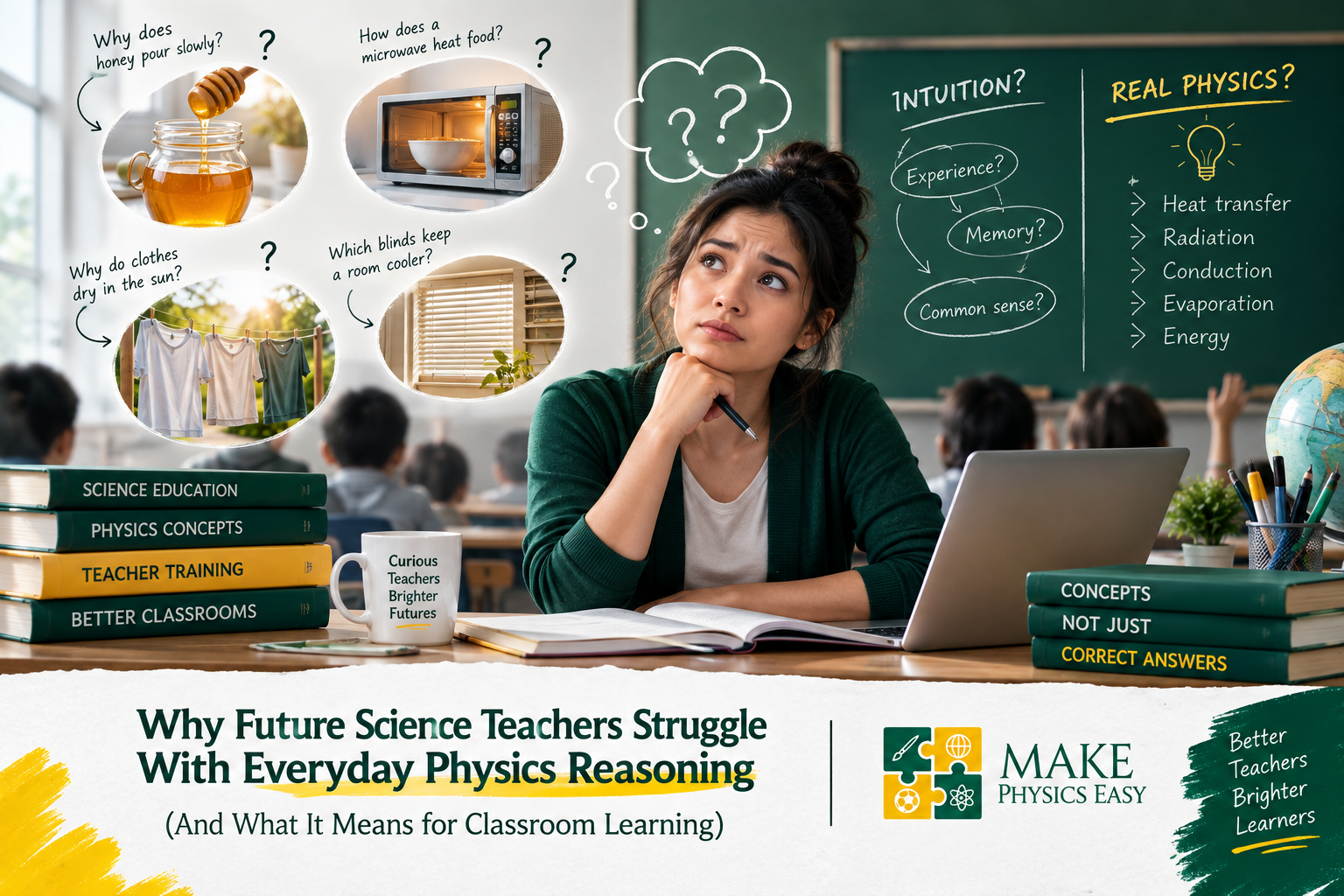
Why Future Science Teachers Struggle With Everyday Physics Reasoning

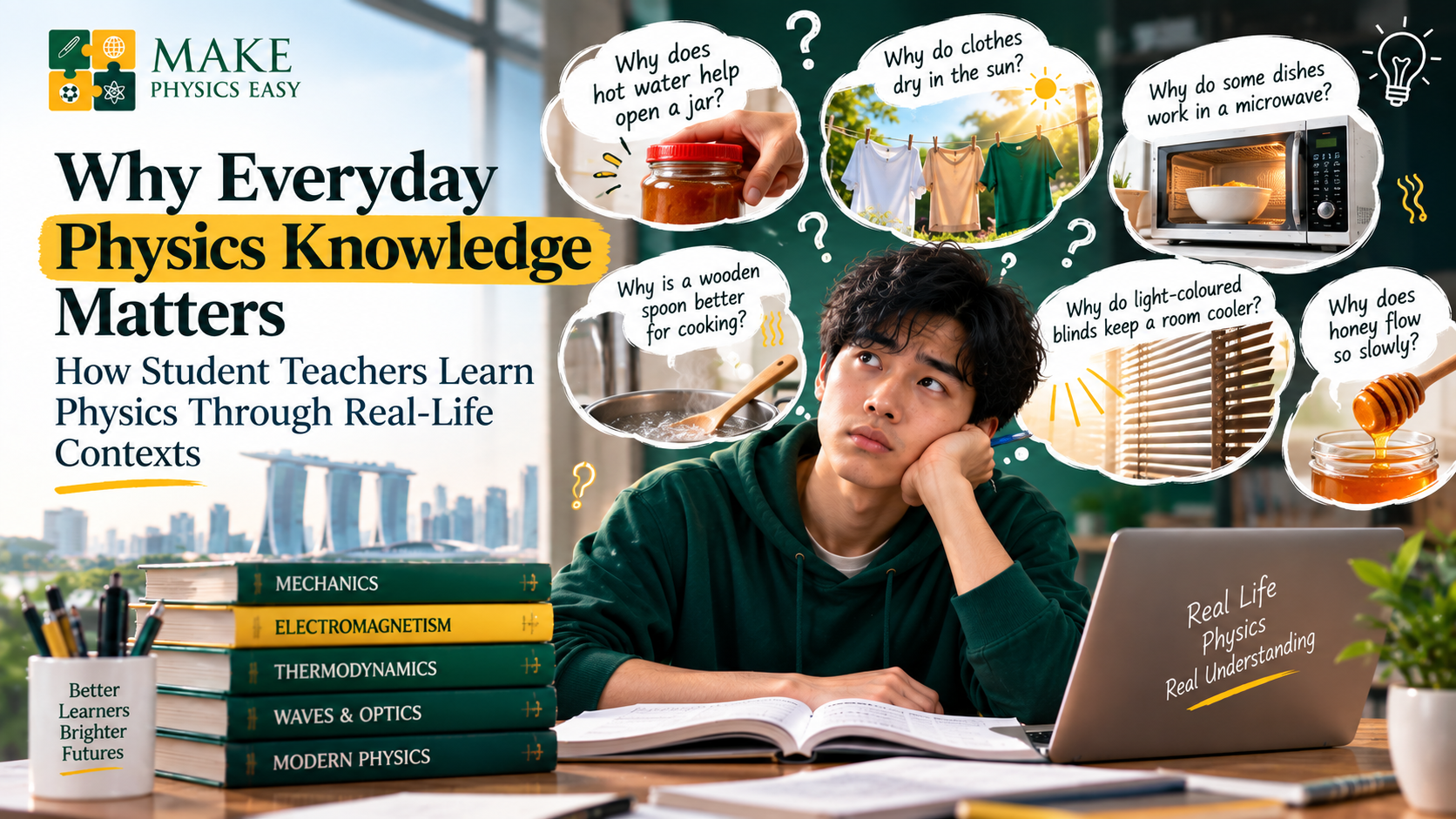
If you've ever watched a science teacher explain why honey pours slowly or how a microwave heats food — and felt something was slightly off — you're not alone. A fascinating new study on everyday physics reasoning in student teachers reveals a surprising truth: future elementary and primary science teachers often get the right answer, but for completely the wrong reasons.

Read More
How Singapore Students Are Using Physics to Break Into Quantitative Finance
Physics
10 Min Read read

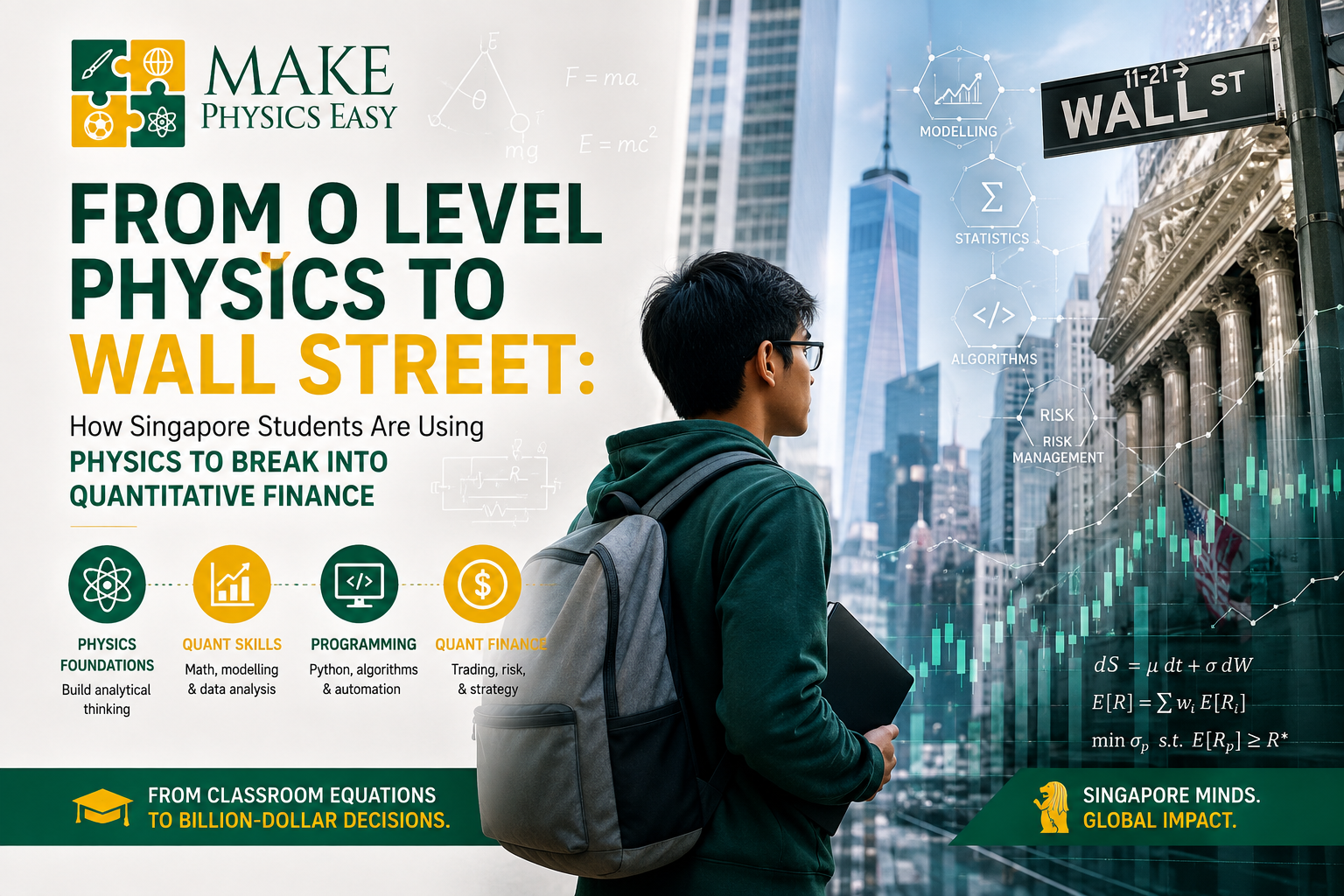
How Singapore Students Are Using Physics to Break Into Quantitative Finance

When I was helping my younger cousin choose her O Level subject combination, she kept asking, "What's the point of physics? I'm not going to be an engineer." I didn't have a great answer then. But a few years later, watching her land an internship at a major hedge fund after reading Physics at NUS — I finally understood what most students in Singapore still don't

Read More
Electricity and Magnetism The 1 Topic That Makes or Breaks Your O-Level Physics Grade
Physics
10 Min Read read

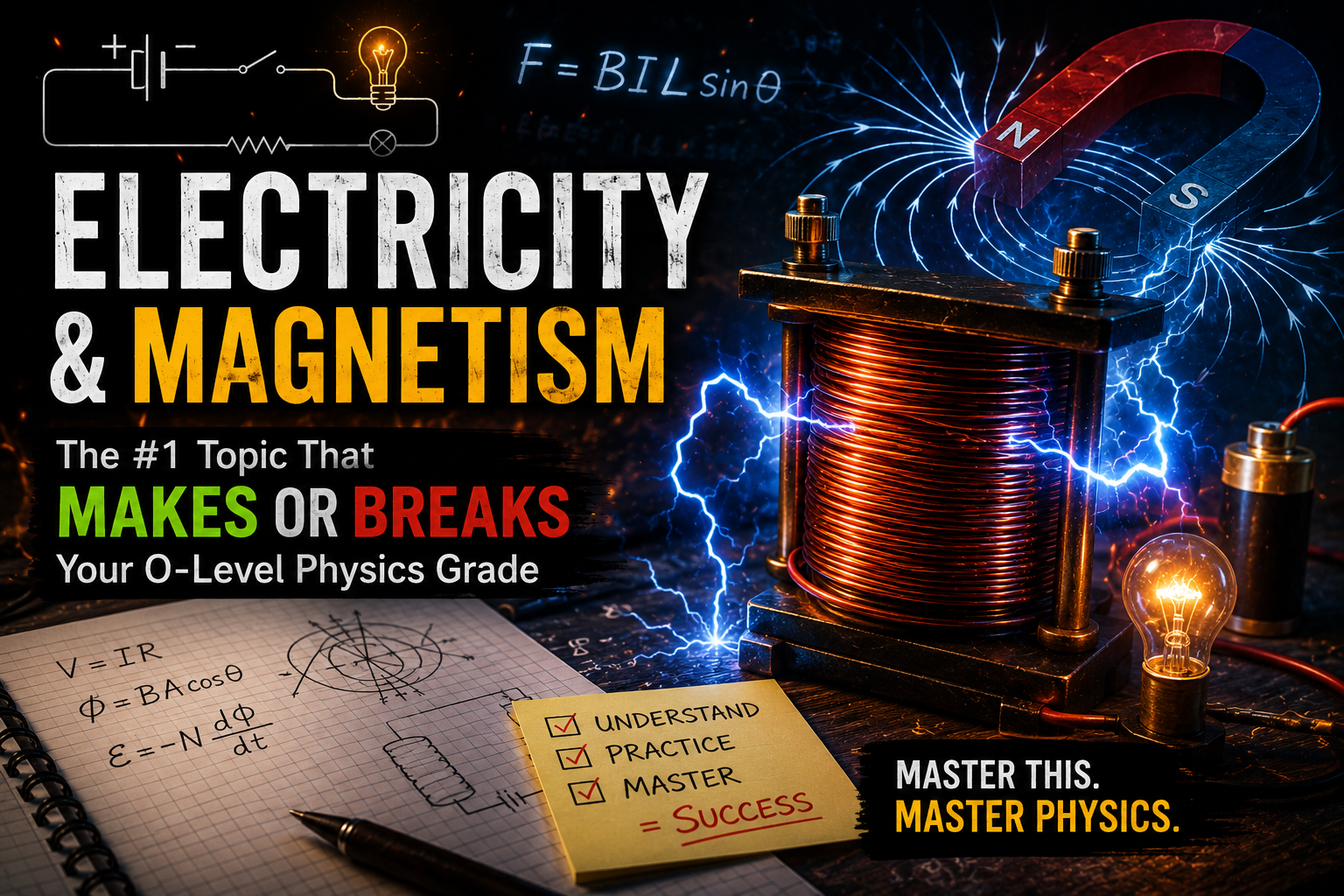
Electricity and Magnetism The 1 Topic That Makes or Breaks Your O-Level Physics Grade

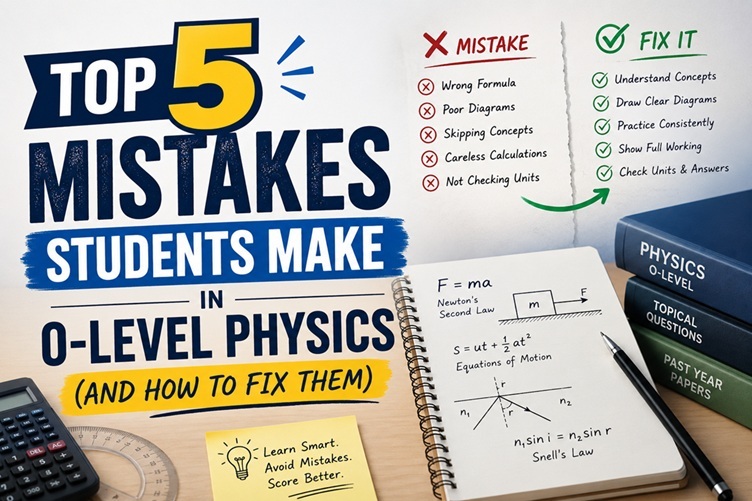
Let me tell you about the most predictable conversation I have every year. A Sec 4 student arrives for their first session, usually sometime in Term 2 or Term 3. They hand me their latest class test. There's a pattern I've seen so many times I can almost guess the score before I look: solid marks on kinematics, reasonable marks on forces, and then — a cliff edge — somewhere around the electricity and magnetism section.

Read More
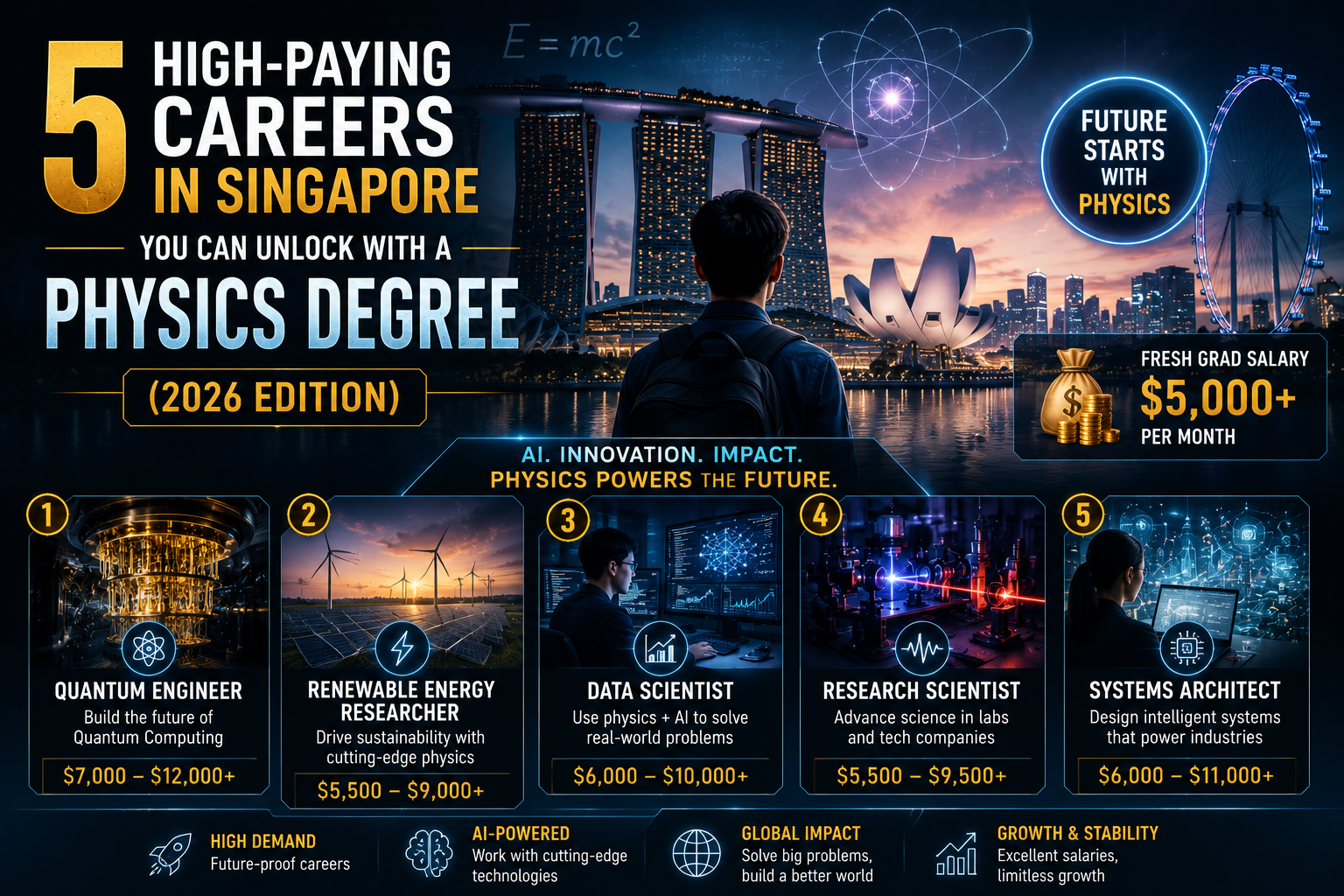
5 High Paying Careers in Singapore You Can Unlock with a Physics Degree
Career Skills
10 Min Read read

5 High Paying Careers in Singapore You Can Unlock with a Physics Degree

AI is transforming opportunities for physics graduates across quantum computing, renewable energy, and data science — with demand for physicists who can work with machine learning and automated tools growing rapidly. Singapore is actively hiring quantum engineers, research scientists, and systems architects — with fresh graduate salaries starting at SGD $5,000+ per month. This is highly clickable for students wondering "why should I bother studying physics?"

Read More
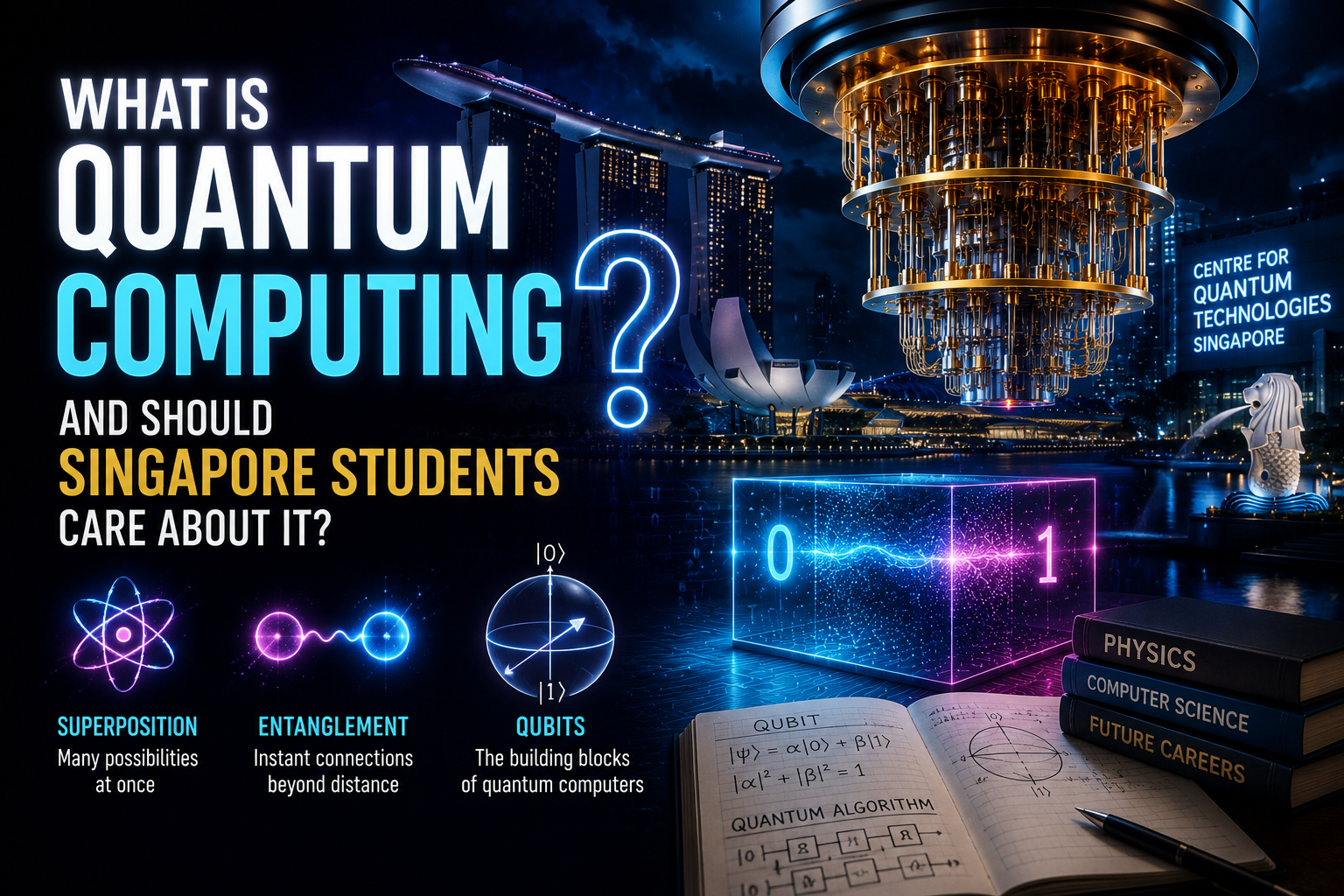
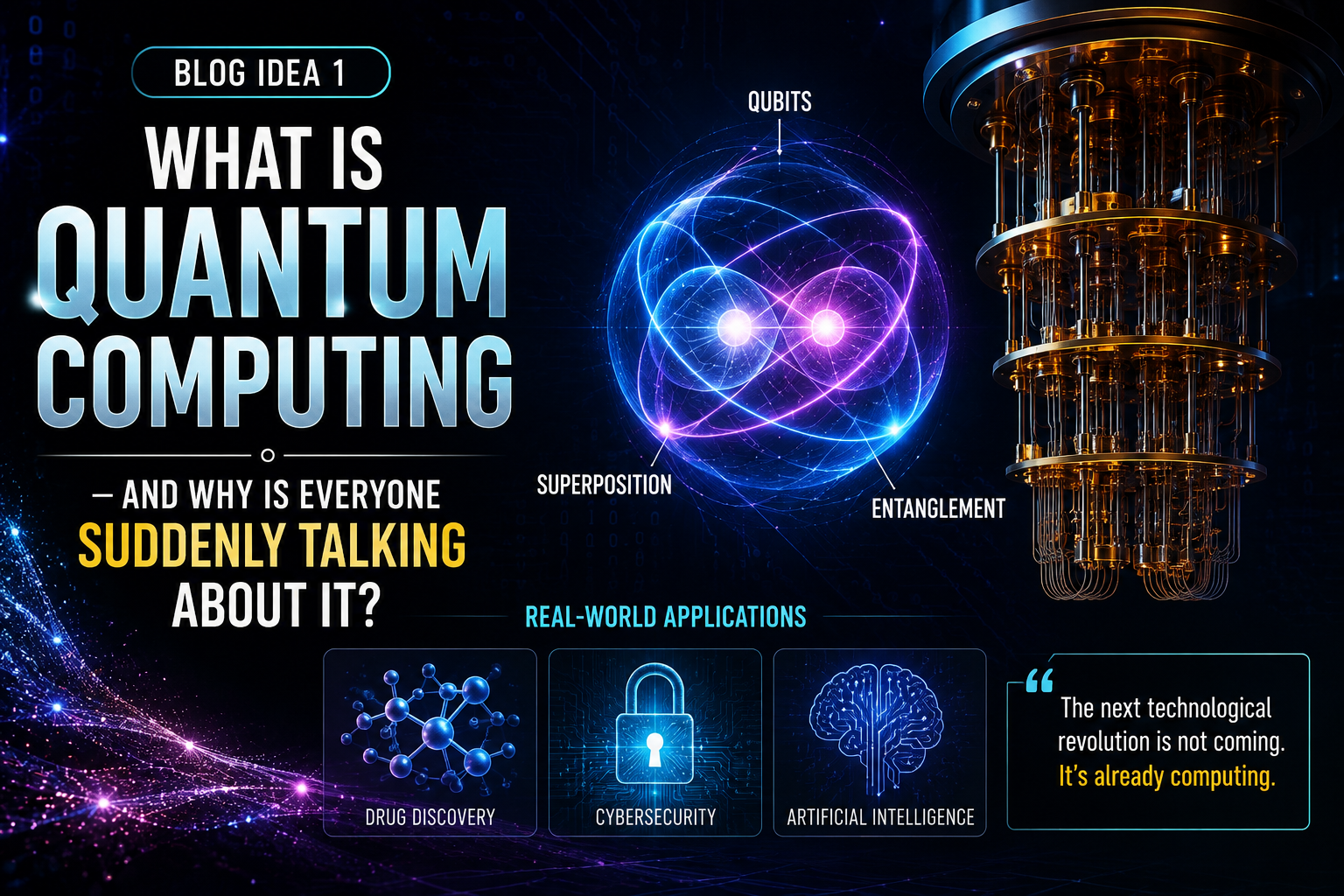
What Is Quantum Computing - Physics Made Easy
Physics
10 Min Read read

What Is Quantum Computing - Physics Made Easy

A Sec 4 student asked me something recently that I didn't expect. We had just finished a session on wave-particle duality — one of the newer additions to the H2 Physics syllabus — and she looked up from her notes and said: "Sir, this stuff about electrons behaving like waves... is this what quantum computers use?"

Read More
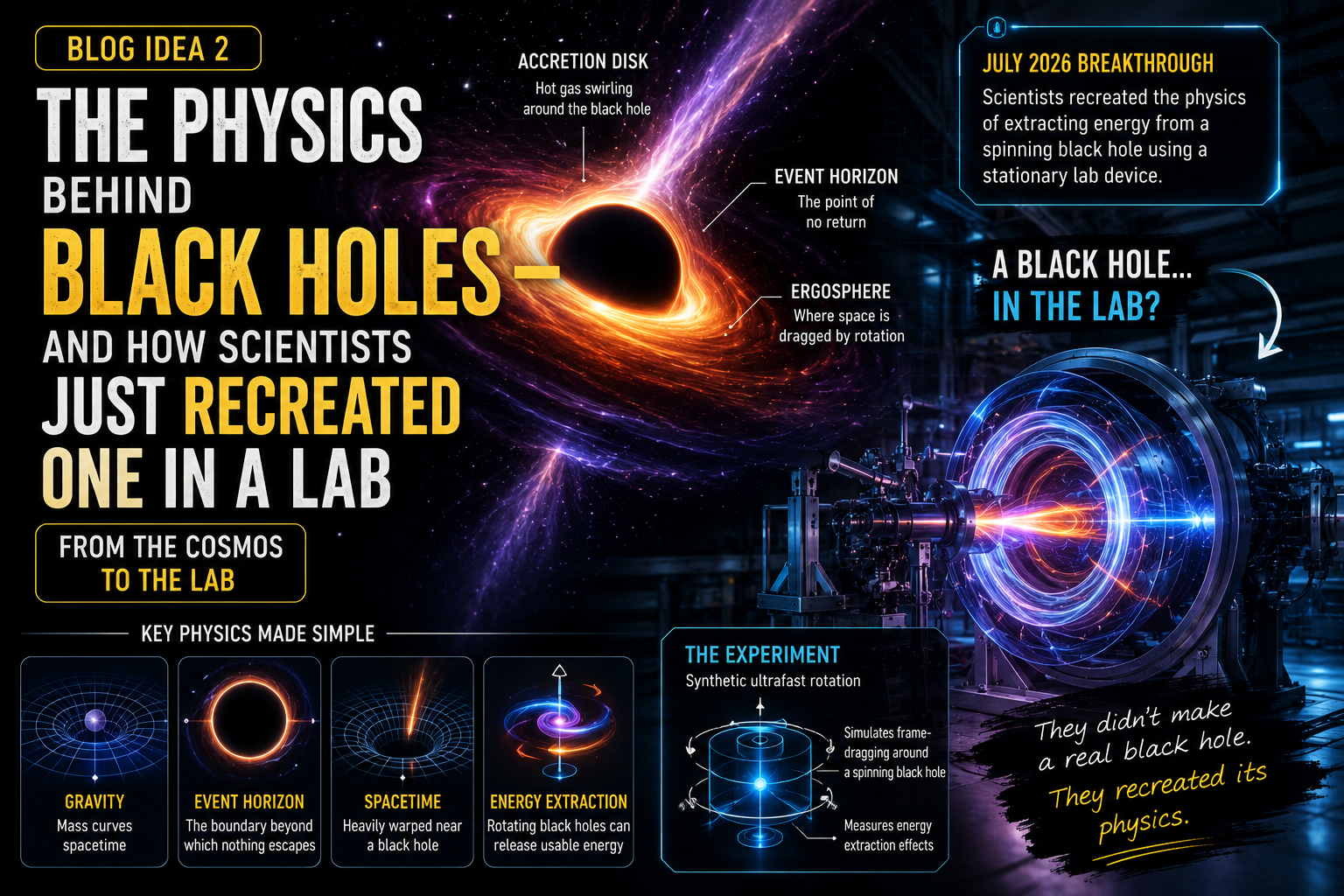
The Physics Behind Black Holes by Make Physics Easy
Physics
10 Min Read read

The Physics Behind Black Holes by Make Physics Easy

Let me start with the headline that stopped my students mid-conversation last month. In July 2026, physicists at the CUNY Graduate Center published a paper in Nature describing something that sounds like it belongs in a science fiction film: they recreated the physics of extracting energy from a spinning black hole

Read More
Why Foam Balls and Bedsheets Teach Physics Better Than Textbooks And What It Means for Physics Coaching in Singapore
Physics
7 min read

Why Foam Balls and Bedsheets Teach Physics Better Than Textbooks And What It Means for Physics Coaching in Singapore

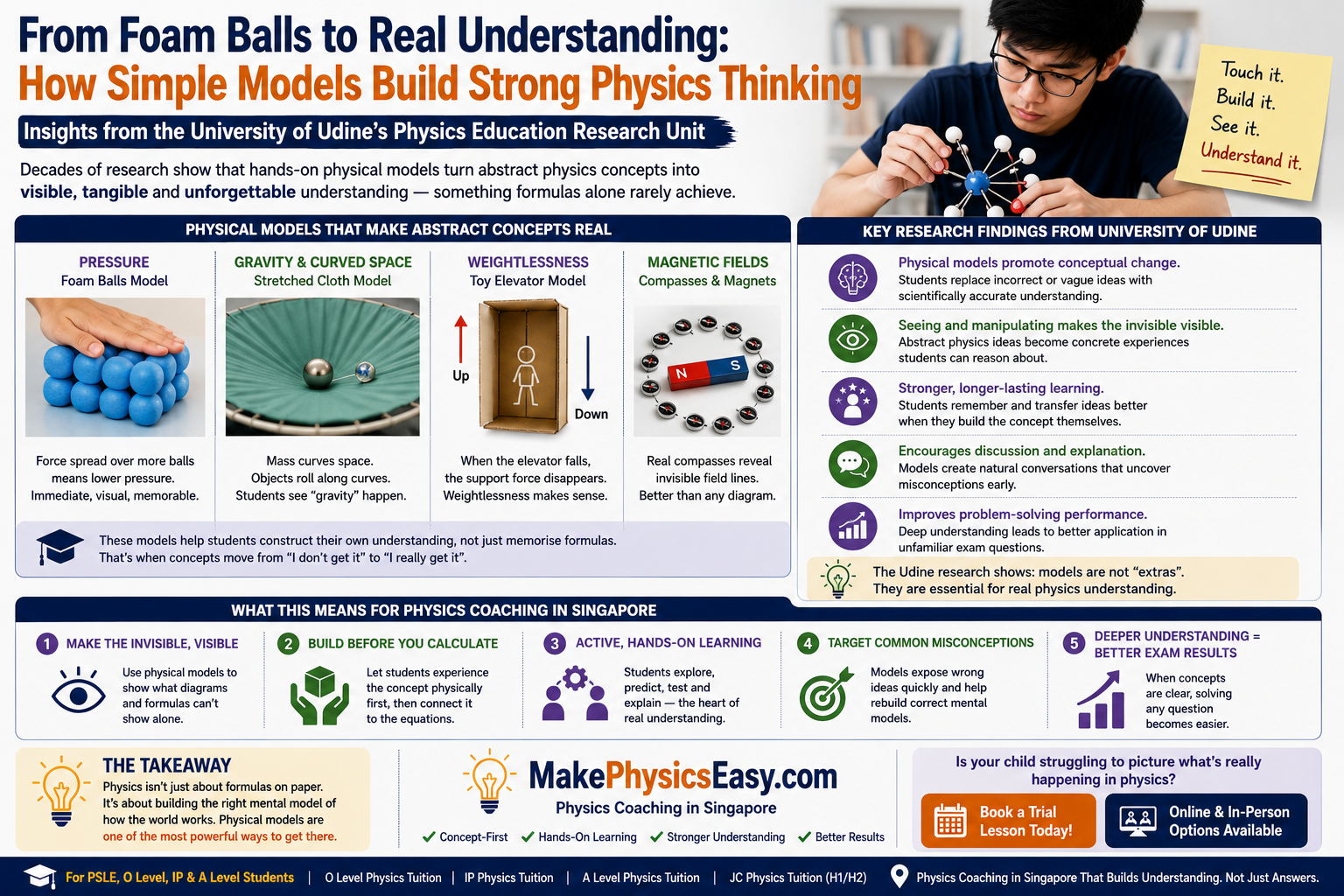
A University of Udine research programme shows how simple physical models — foam balls, stretched cloth, toy elevators — build real physics understanding where formulas alone fail. Here's what it means for effective physics coaching in Singapore. What do rubber foam balls, a stretched bedsheet, and a cardboard shirt box have to do with physics education? According to decades of research from the Physics Education Research Unit at the University of Udine, quite a lot. Their work shows that some of the most abstract and exam-troubling physics concepts — pressure, gravity, weightlessness, magnetic fields — become genuinely understandable when students can touch, build, and manipulate a physical model of the idea first. This has real implications for how physics coaching in Singapore should be designed for students who "know the formula" but can't picture what's actually happening.

Read More
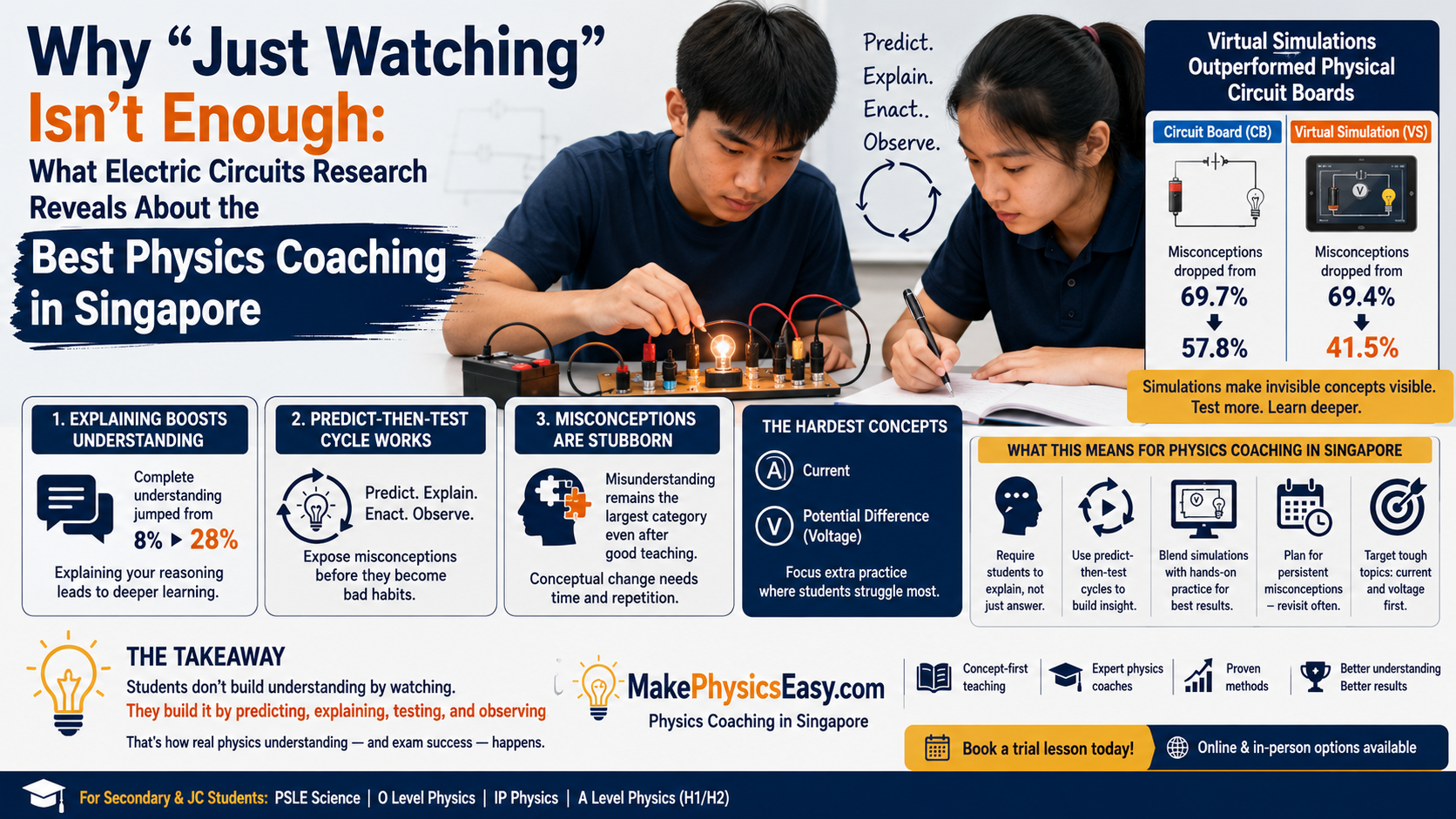
Why Just Watching Isn't Enough What Electric Circuits Research Reveals About the Best Physics Coaching in Singapore
Physics
10 min read

Why Just Watching Isn't Enough What Electric Circuits Research Reveals About the Best Physics Coaching in Singapore

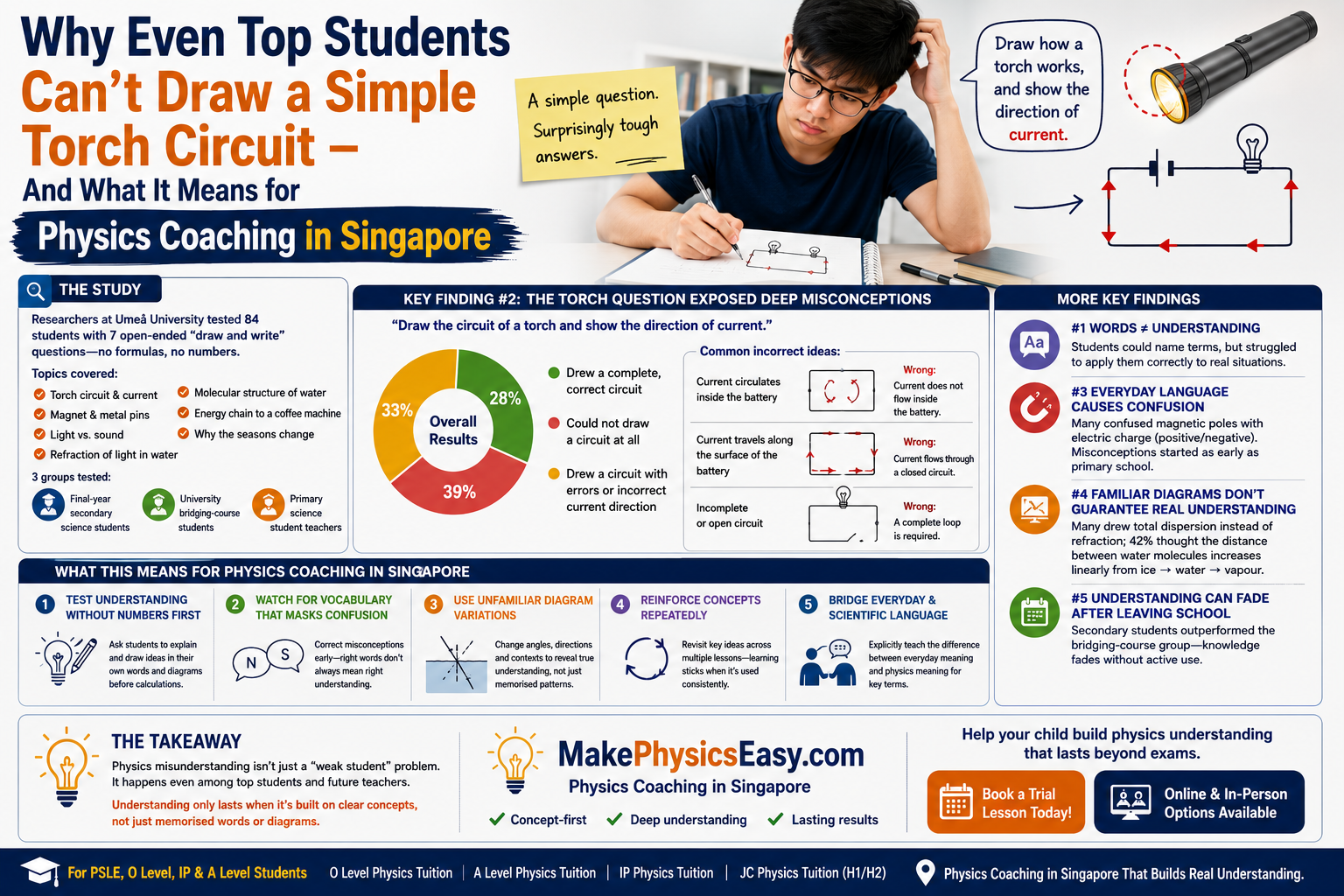
New research on teaching electric circuits shows why explaining and hands-on enacting beat passive learning — and how this shapes effective physics coaching in Singapore for secondary and JC students. Ask any secondary school or JC student to explain why a bulb lights up in a circuit, and you'll often get a confident but incorrect answer. Electric circuits are one of the most persistently misunderstood topics in physics — and a study from King Mongkut's University of Technology Thonburi shows exactly why, along with what actually works to fix it. The findings carry direct lessons for how physics coaching in Singapore should be structured for students who struggle with circuits, current, and voltage.

Read More
Latest trends in Education
Physics
15 min read read

Latest trends in Education

The 2025 education research roundup highlights a shift toward balancing modern technology with time-tested developmental practices, notably through evidence that cell phone bans for nearly 17,000 students and a return to manual handwriting over typing significantly boost academic performance and literacy. While AI shows promise in reducing teacher administrative burdens—specifically in drafting IEPs of equal quality to human-written ones—it appears to sabotage student learning, as MIT researchers found that only 17% of AI-assisted writers could recall their own work compared to nearly 90% of independent writers. Furthermore, the studies emphasize the biological necessity of 90-second microbreaks every ten minutes and at least 45 minutes of daily recess (which reduced stress hormones by 68%) to sustain student focus and well-being. Ultimately, the data underscores that high-quality learning remains rooted in human elements: practice-based teacher training, resisting the urge to over-help struggling learners, and prioritizing trusting student-teacher relationships, which have been shown to improve overall achievement by 8.4 percentile points.

Read More
Design Thinking
Physics
read

Design Thinking

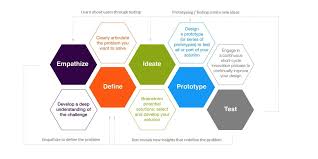
Design thinking is a human-centered problem-solving approach that focuses on deeply understanding users, defining the right problems, and iteratively creating and testing solutions

Read More
Why should limited instructional time should be devoted to chess
Physics
10 read

Why should limited instructional time should be devoted to chess

Dr. Jeff Bulington of the Franklin Chess Center in rural Mississippi opened the morning sessions by addressing a fundamental question: why should limited instructional time be devoted to chess? He examined the challenge of transfer—acknowledging that while chess skill is highly specific, when taught intentionally, chess can develop transferable skills in planning, decision-making, and strategic thinking. Bulington emphasized combining "chess in depth" with "chess in breadth," grounding programs in clear pedagogical purposes rather than claims of automatic cognitive transfer. A panel on the philosophy of games and learning explored how games cultivate curiosity, resilience, and experimentation. Dr. Troy Seagraves of Purdue University's Virtual Reality and Artificial Intelligence Lab discussed how games capture attention and foster task-oriented reasoning. FIDE Master Dr. Loren Schmidt of Heritage University examined feedback loops in chess, demonstrating how immediate response to moves—paired with a community that discusses and analyzes play—creates essential conditions for developing both chess skill and broader meaning-making systems.

Read More
More than a happy learner!
Physics
5 min. read read

More than a happy learner!

Flow in learning = the sweet-spot where skill and challenge are balanced so perfectly that the learner loses the sense of time, effort, and even self.

Read More

Get Study Tips Delivered

Join 500+ students receiving our monthly digest on Physics hacks, Chess puzzles, and exam strategies.

No spam. Unsubscribe anytime.